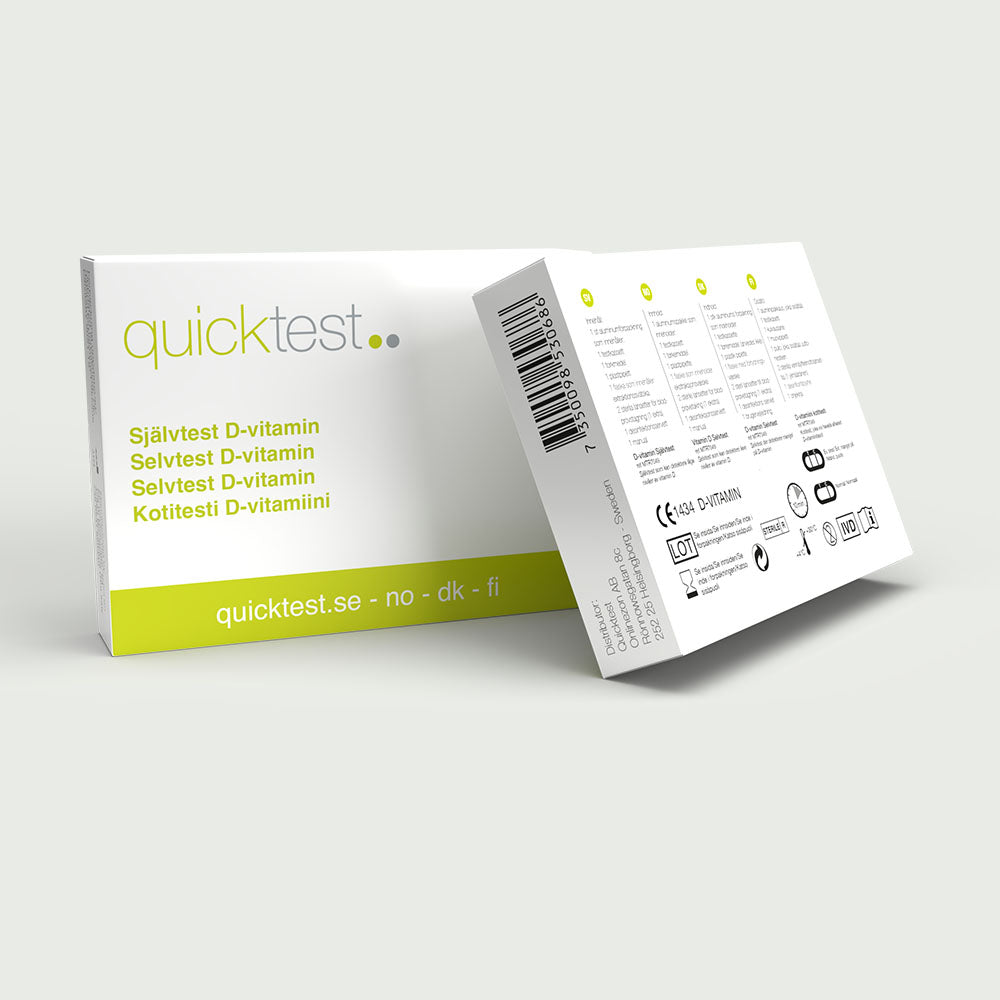
Do you suffer from vitamin D deficiency?
Then you are not alone.
Nearly two-thirds of Europe's population does not have sufficient levels of vitamin D in their bodies. This fat-soluble vitamin is important for a variety of functions in the body and is responsible for increasing the intestinal absorption of calcium, iron, magnesium, phosphate and zinc.
Vitamin D contributes to the normal function of the immune system, muscles and bones, among other things. Vitamin D is also linked to your mental health. Vitamin D deficiency can cause serious conditions, especially if the deficiency has been present for a long period of time.
The Quicktest Vitamin D Self-Test is used to detect the level of 5-OH-vitamin D in the blood. The test shows positive for vitamin D deficiency if your vitamin D levels are below 30 ng/ml.
Cause of vitamin D deficiency
During the winter months when the sun is low in our northern latitudes, our bodies cannot produce vitamin D themselves using sunlight. This puts us at greater risk of developing a vitamin D deficiency. You can also develop a vitamin D deficiency if you have a disease that makes it difficult for your intestines to absorb nutrients, or if you eat a very limited diet. Vegans and other people who do not eat fish or fortified foods are at risk of developing a vitamin D deficiency if they do not take supplements.
Symptoms of vitamin D deficiency
Vitamin D deficiency in adults is a condition that develops over a long period of time.
Symptoms of vitamin D deficiency are often diffuse and can include general fatigue, depression, lack of energy, muscle weakness/muscle cramps, digestive problems and headaches. Vitamin D deficiency can cause serious conditions, especially if the deficiency has occurred over a longer period of time. If there is too little vitamin D, the absorption of calcium in the body is inhibited, which in turn affects the bone tissue.
Severe vitamin D deficiency can cause symptoms in the form of softer or more fragile bones, known as osteoporosis. Children are particularly vulnerable to vitamin D deficiency as their bones need vitamin D to develop properly.
Low levels of vitamin D can lead to premature birth, increased risk of preeclampsia and lower birth weight, among other things.
Publication information
Fact-checked 2024-11-11 by
Leg Doctor Fredrik Lönnqvist
Leg Nurse